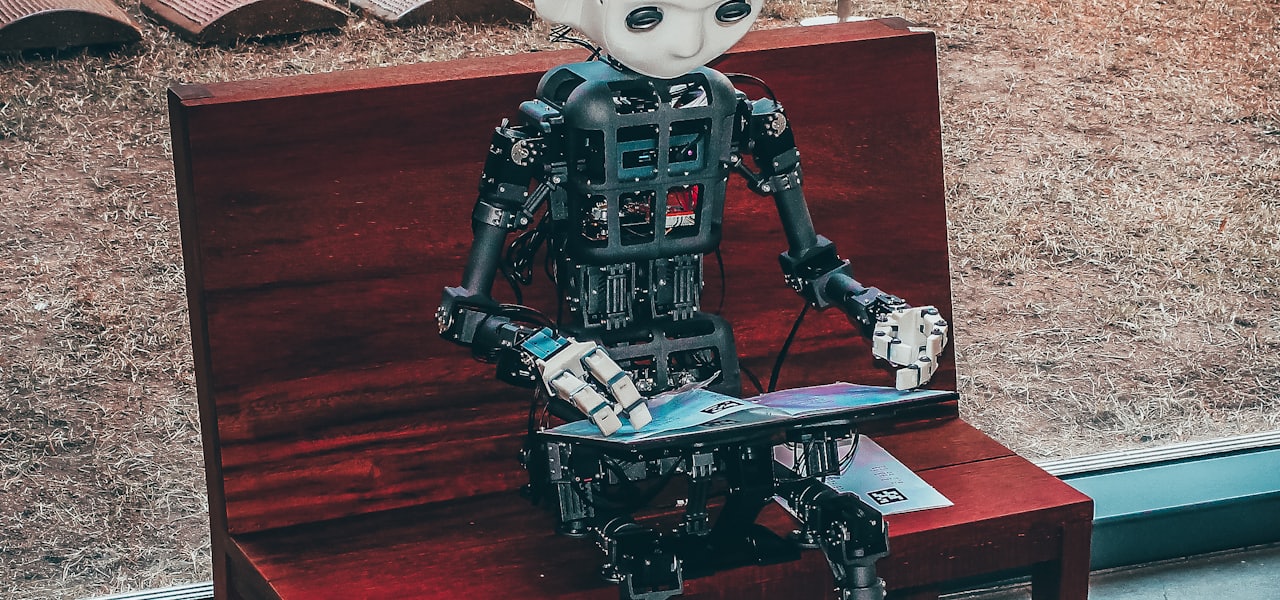
PainWorth is a justice, legal and insurance services application founded by Canadian entrepreneurs Mike Zouhri, Chris Trudel and Ryan Bencic. The application is a "robot lawyer" that uses artificial intelligence to automate personal injury claims for injury victims. It is currently available in Canada and the United States. PainWorth has been featured by several news outlets, including CTV, Global News, CBC, and has also been featured by the American Bar Association and LexisNexis for its role addressing social issues such as access to justice and other systemic issues in the legal and insurance industry. == Application == PainWorth began as a tool for calculating non-pecuniary damages for injury victims but has since expanded beyond a personal injury calculator to include features that help injury victims and business users with pecuniary damages, economic calculations, prescribed rates and providing informational guides to help navigate settlement negotiation, managing claims records and other issues encountered by self-represented litigants or claims managers. The platform makes use of automation to provide free user-guided calculations, steps and processes to successfully settle an injury claim. The application is supported by Microsoft Azure. == Personal Injury Calculator == PainWorth is the first service to use Artificial Intelligence to interpret case law in order to determine the value of pain and suffering incurred by specific injury types and injury severities. The cited case law is used as evidence and presented in statistical models to determine an accurate valuation compliant with the jurisdiction, regulatory rules and case complexities. == General Damages Calculator == PainWorth also offers a personal injury settlement calculator that assesses general damages based on specific case complexities and jurisdiction. The service takes into account medical complications and recovery in order to calculate the fair valuation. == Injury Settlement Platform == PainWorth insurance settlement platform facilitates a direct and automated way resolution center to settle cases for their assessed value without enduring the hardship of litigation. In 2021, Painworth won the title of World's Best Emerging Insurance Product for the development of this platform. == History == In 2019, Mike Zouhri was struck by a drunk driver which left him seriously injured and resulted in a lawsuit. Frustrated by the slow and expensive process, Zouhri went down to the law library and learned how to manage injury claims. After learning the process, he partnered lawyers and legal advisors to create an app to allow users to quickly settle their own injury claims fairly and accurately. Immediately after its launch, PainWorth quickly became widely used by thousands of users and gained significant media coverage. Global News reported that the bot had successfully helped people with more than $10 million in claims in only a few short months, all free of charge. In July 2020, PainWorth began raising concern over injustices and gender bias in the legal system. in Canadian courts.
Free boundary condition
In image processing, the free boundary condition is the convention used when applying a convolution kernel to a digital image in which pixel locations that lie outside the image boundaries are interpreted as having a value of zero.[1] The question of what value to assign out-of-bounds pixels may arise, for instance, when applying a 3×3 kernel to the corner pixel in an image.
Mirella Lapata
Mirella Lapata is a computer scientist and Professor in the School of Informatics at the University of Edinburgh. Working on the general problem of extracting semantic information from large bodies of text, Lapata develops computer algorithms and models in the field of natural language processing (NLP). == Education == Lapata obtained a Master of Arts (MA) degree from Carnegie Mellon University and subsequently earned a doctorate from the University of Edinburgh. Lapata's doctoral research investigated the acquisition of information from polysemous linguistic units using probabilistic methods supervised by Alex Lascarides, Chris Brew and Steve Finch. == Career and research == After her doctorate, Lapata assumed academic positions at Saarland University and at the Department of Computer Science at the University of Sheffield. At the University of Edinburgh she became a reader in the School of Informatics where she is a full Professor and holds a personal chair in natural language processing. Lapata is a member of the Human Communication Research Center and Institute for Language, Cognition and Computation, both in Edinburgh. Between 2015 and 2017, Lapata served as a member of the Royal Society Machine Learning Working Group. Recently Lapata was granted a European Research Council (ERC) Consolidator Grant worth €1.9M to fund five years of her project, TransModal: Translating from Multiple Modalities into Text. === Awards and honours === In 2009 Lapata became the first recipient of the Microsoft British Computer Society (BCS)/BCS IRSG Karen Spärck Jones Award. The award recognises achievement in furthering the progress in information retrieval and natural language processing; the award commemorates the life and work of Karen Spärck Jones. In 2012 Lapata won an Empirical Methods in Natural Language Processing (EMNLP)-CoNLL 2012 Best Reviewer Award. In 2018 Lapata was awarded, alongside Li Dong, an Association for Computational Linguistics (ACL) Best Paper Honorable Mention. In 2019 Lapata was elected a Fellow of the Royal Society of Edinburgh In 2020 Lapata was elected to the Academia Europaea. In 2025 Lapata was awarded the BCS Lovelace Medal for Computing Research.
Lübke English
The term Lübke English (or, in German, Lübke-Englisch) refers to nonsensical English created by literal word-by-word translation of German phrases, disregarding differences between the languages in syntax and meaning. Lübke English is named after Heinrich Lübke, a president of Germany in the 1960s, whose limited English made him a target of German humorists. In 2006, the German magazine konkret revealed that most of the statements ascribed to Lübke were in fact invented by the editorship of Der Spiegel, mainly by staff writer Ernst Goyke and subsequent letters to the editor. In the 1980s, comedian Otto Waalkes had a routine called "English for Runaways", which is a nonsensical literal translation of Englisch für Fortgeschrittene (actually an idiom for 'English for advanced speakers' in German – note that fortschreiten divides into fort, meaning "away" or "forward", and schreiten, meaning "to walk in steps"). In this mock "course", he translates every sentence back or forth between English and German at least once (usually from German literally into English). Though there are also other, more complex language puns, the title of this routine has gradually replaced the term Lübke English when a German speaker wants to point out naive literal translations.
Self-verifying finite automaton
In automata theory, a self-verifying finite automaton (SVFA) is a special kind of a nondeterministic finite automaton (NFA) with a symmetric kind of nondeterminism introduced by Hromkovič and Schnitger. Generally, in self-verifying nondeterminism, each computation path is concluded with any of the three possible answers: yes, no, and I do not know. For each input string, no two paths may give contradictory answers, namely both answers yes and no on the same input are not possible. At least one path must give answer yes or no, and if it is yes then the string is considered accepted. SVFA accept the same class of languages as deterministic finite automata (DFA) and NFA but have different state complexity. == Formal definition == An SVFA is represented formally by a 6-tuple, A=(Q, Σ, Δ, q0, Fa, Fr) such that (Q, Σ, Δ, q0, Fa) is an NFA, and Fa, Fr are disjoint subsets of Q. For each word w = a1a2 … an, a computation is a sequence of states r0,r1, …, rn, in Q with the following conditions: r0 = q0 ri+1 ∈ Δ(ri, ai+1), for i = 0, …, n−1. If rn ∈ Fa then the computation is accepting, and if rn ∈ Fr then the computation is rejecting. There is a requirement that for each w there is at least one accepting computation or at least one rejecting computation but not both. == Results == Each DFA is a SVFA, but not vice versa. Jirásková and Pighizzini proved that for every SVFA of n states, there exists an equivalent DFA of g ( n ) = Θ ( 3 n / 3 ) {\displaystyle g(n)=\Theta (3^{n/3})} states. Furthermore, for each positive integer n, there exists an n-state SVFA such that the minimal equivalent DFA has exactly g ( n ) {\displaystyle g(n)} states. Other results on the state complexity of SVFA were obtained by Jirásková and her colleagues.
Toad Data Modeler
Toad Data Modeler is a database design tool allowing users to visually create, maintain, and document new or existing database systems, and to deploy changes to data structures across different platforms. It is used to construct logical and physical data models, compare and synchronize models, generate complex SQL/DDL, create and modify scripts, and reverse and forward engineer databases and data warehouse systems. Toad's data modelling software is used for database design, maintenance and documentation. == Product History == Toad Data Modeler was previously called "CASE Studio 2" before it was acquired from Charonware by Quest Software in 2006. Quest Software was acquired by Dell on September 28, 2012. On October 31, 2016, Dell finalized the sale of Dell Software to Francisco Partners and Elliott Management, which relaunched on November 1, 2016 as Quest Software. == Features/Usages == Multiple database support - Connect multiple databases natively and simultaneously, including Oracle, SAP, MySQL, SQL Server, PostgreSQL, Db2, Ingres, and Microsoft Access. Data modelling tool - Create database structures or make changes to existing models automatically and provide documentation on multiple platforms. Logical and physical modelling - Build complex logical and physical entity relationship models and reverse, forward, and engineer databases. Reporting - Generate detailed reports on existing database structures. Model customization - Add logical data to user diagrams to customize user models. All Toad products typically have 2 releases per year. == Other features == Model Actions (Compare Models, Convert Model, Merge Models, Generate Change Script) Version Control System (Apache Subversion) Naming Conventions Auto Layout Multiple Workspaces Scripting and Customization Automation Object Gallery Full Unicode Support Integration with Toad for Oracle == Related Software == Erwin Data Modeler Oracle SAP MySQL SQL Server PostgreSQL IBM Db2 Ingres Microsoft Access
AI Photo Editors: Free vs Paid (2026)
Trying to pick the best AI photo editor? An AI photo editor is software that uses machine learning to help you get more done — it scales effortlessly from a single task to thousands. The best picks balance beginner-friendly simplicity with the depth power users need, and they ship updates often. Whether you are a beginner or a pro, the right AI photo editor slots into your workflow and pays for itself fast. Read on for hands-on impressions, pricing tiers, and the standout features that matter.